Abstract
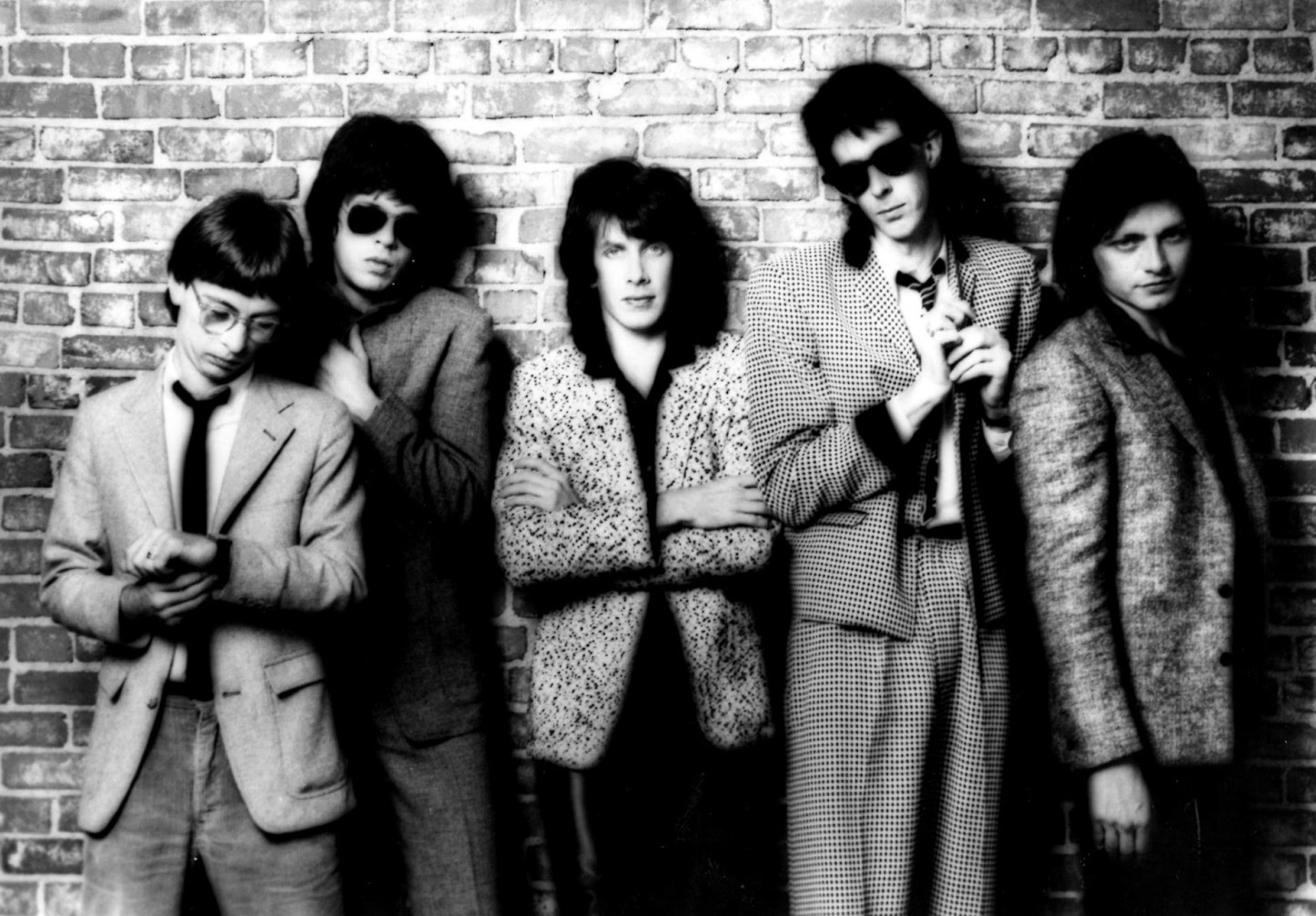
A remembered 1979 concert by The Cars at the Pacific Coliseum in Vancouver grounds the inquiry developed here. Benjamin Orr, bassist and co-lead vocalist with the band, stands at the centre of the remembered scene and of its long afterlife. The event has remained vivid without remaining orderly. Songs recur. Bodily sensation persists. Later knowledge folds back into the room. Fourteen becomes sixteen. A woman absent from the historical event enters recollection with full sensory force. Rather than treating these distortions as error, the paper reads them as evidence of memory’s reconstructive and affective force. Drawing on critical autoethnography, arts-based research, memory studies, and Riffology, it argues that concert memory persists through recomposition. What survives is an arrangement of sound, posture, atmosphere, and attachment that keeps reorganizing itself in the present.
Keywords: Benjamin Orr; The Cars; autobiographical memory; critical autoethnography; arts-based research; popular music; Riffology
Introduction
A remembered 1979 concert by The Cars at the Pacific Coliseum in Vancouver grounds the inquiry developed here. Benjamin Orr, bassist and co-lead vocalist with the band, stands at the centre of that remembered scene and of its long afterlife. The event has remained vivid without remaining orderly. Songs recur. Bodily sensation persists. Later biographical knowledge folds back into the remembered room. Fourteen becomes sixteen. A woman absent from the historical event enters recollection with full sensory force. These disruptions matter because they show the terms under which musical experience remains active across decades.
This study proceeds through critical autoethnography, arts-based research, memory studies, and Riffology. Critical autoethnography makes lived experience available as cultural analysis while keeping that experience tied to larger formations of gender, class, performance, and public culture (Ellis et al., 2011; Boylorn & Orbe, 2014). Arts-based research matters because the central scene carries part of the analytic labour in its cadence, texture, and sensory density (Barone & Eisner, 2012; Leavy, 2015). Memory studies clarify that autobiographical recollection is reconstructive, shaped by present standpoint, affective intensity, and later knowledge (Conway & Pleydell-Pearce, 2000; Conway, 2005). Riffology adds a methodological vocabulary for recurrence, assemblage, and recombination, one suited to a scene that returns through replay, fragments, and renewed intensities (Stevens & Wainwright, 2016; Wainwright & Stevens, 2017, 2020).
Three questions guide the discussion. How does a remembered encounter with Orr illuminate the relation between autobiographical memory and musical affect? How does the scene register adolescent masculinity as aspiration, performance, and desire? What follows methodologically when temporal discrepancy is treated as data? The claim advanced here is direct. Concert memory persists through recomposition. What survives is an arrangement of sound, posture, atmosphere, and attachment that keeps reorganizing itself in the present.
Conceptual Frame and Literature Review
Autobiographical Memory, Music and Afterlife
Autobiographical memory provides the first footing, but only up to a point. Conway and Pleydell-Pearce (2000) describe autobiographical memory as a dynamic system organized in relation to the self, while Conway (2005) emphasizes its reconstructive relation to identity. That matters here because the concert scene survives through altered age, displaced presence, and retrospective intensification. Such slippages are not incidental. They indicate how memory holds what still matters. Yet autobiographical memory theory on its own does not fully account for the role of replayed music in keeping a scene sensorially active long after the event has passed. The problem here is not memory as storage. It is memory as return.
Scholarship on music and everyday life sharpens that point. Frith (1996) argues that popular music is bound up with identity and self-performance. DeNora (2000) shows how music organizes mood, atmosphere, and everyday self-making. Songs replay, travel, and reactivate bodily states before they become fully available to explanation. A concert therefore persists as more than a dated event. It acquires an afterlife through circulation, renewed listening, and sensory return. The remembered performance by The Cars remains active because the songs continue to cue the scene, and because that cueing repeatedly folds past and present into one another. The scene survives as atmosphere and bodily return as much as information.
Critical Autoethnography, Arts-Based Research, and Riffology
Critical autoethnography provides the bridge between memory and music. Ellis et al. (2011) position autoethnography as inquiry in which personal experience becomes a means of understanding cultural experience. Boylorn and Orbe (2014) insist that such work attend to discourse, power, and historical formation. That insistence matters here. The remembered encounter with Orr is singular, though its conditions are social. It is saturated with adolescent masculinity, local class codes, public performance, rock glamour, heterosexual display, and the unstable line between admiration and desire.
Arts-based research extends that bridge by treating aesthetic form as constitutive of inquiry rather than supplementary to it (Barone & Eisner, 2012; Leavy, 2015). In this study, the central scene is held in a different register from the surrounding scholarly prose because its formal density belongs to the method. Description carries thought. Cadence carries relation. Sensory pressure carries analysis.
Riffology gives the study its final conceptual edge. Stevens and Wainwright (2016) describe Riffology as interactive, freeform, technologically mediated, and shaped by assemblage and learning events. Wainwright and Stevens (2017, 2020) extend that orientation through remix, relation, and movement across media and contexts. The vocabulary is especially apt here because the remembered concert returns through loops, fragments, sensual carryover, and renewed listening. Read through Riffology, memory appears as recomposition. The scene is repeatedly reworked through song, image, body, and thought. It does not remain intact. It remains active.
Research Design and Method
This study uses critical autoethnography and arts-based research, informed by Riffology. Its object is a remembered concert by The Cars at the Pacific Coliseum in Vancouver on September 22, 1979, approached through one dense node of recollection: Benjamin Orr’s appearance and afterlife in memory. The materials include autobiographical memory of the event, sensory and affective recall, the recurring figure of Nancy within the remembered scene, the songs “Moving in Stereo” and “All Mixed Up,” and documentary anchors such as date, venue, and public biographical information.
Documentary materials provide historical coordinates. Memory materials show how the event persists, shifts, and acquires pressure across time. Analysis proceeded through repeated drafting and re-reading of the scene. Across those drafts, I tracked recurrent motifs and points of pressure, including stereo doubling, erotic charge, temporal slippage, masculine glamour, bodily awakening, and mortality’s later return. Documentary sources were used to confirm date, venue, and biographical detail. Writing functioned as analytic procedure. Repeated drafting made the scene available for analysis.
Discrepancies between recollection and documented sequence were retained as data. The remembered age of sixteen, though historically inaccurate, discloses the scale and force the event still occupies in memory. Nancy’s sensory presence within a concert she did not attend reveals the backward movement of later attachment into earlier scenes. Such moments are read not as noise in the system but as evidence of memory’s reconstructive logic and of the social life of recollection.
Central Autoethnographic Scene
All Remixed Up: Benjamin Orr in Stereo
At fourteen, Benjamin Orr arrived as pure present tense. The Pacific Coliseum, Vancouver, September 22, 1979. The Cars came on, and the room changed density. He stood inside that change with such style, calm, and erotic assurance that time seemed briefly to stop leaking away. He stood for a present that would never expire. That was the force of him. I was an East Vancouver kid, all shoulders and appetite, full of that rough local swagger boys gather before they understand what they are carrying. The songs hit, the crowd moved, the body woke up inside the body, and Orr seemed to hold the whole thing in one form. He did not arrive as future. He arrived as now, intensified and made glamorous, adulthood stripped of duration and turned into atmosphere.
The facts say I was fourteen. Memory gives me sixteen. I have stopped trying to force one age to shame the other into silence. Fourteen belongs to the calendar. Sixteen belongs to the signal. I remember the night in stereo. One channel carries the actual boy, born in August 1965, barely into that age, young enough that every public excitement felt enormous. The other channel carries the revised boy, the one memory keeps promoting toward sixteen because sixteen better suits the voltage I still associate with that version of myself, the taller body, the harder posture, the confidence I remember as though it was stitched together from bluff, local code, and the ordinary theatre of adolescence. Both boys move at once. Both are mine. Both tell the truth in the damaged way memory tells it.
Nancy belongs in that split, which is where the piece turns strange. She was not at the concert. I did not meet her until I was seventeen. The sequence is clear enough. Still, she keeps entering that night with the authority of scent. I can smell her skin in the room, or what memory insists was the room, mixed with cigarettes, beer, and lust, the whole damp chemistry of youth condensed into one impossible presence. A shadow from another year, caught in the mirror. Skin-tight pants. Torn T-shirt. That face turned toward me in a way that could make a boy feel briefly raised above his own facts, larger than he was, mythic for an hour. Chronology can object. Memory files by charge. At sixty-one, the archive has stopped keeping strict books. It keeps weather. Nancy crosses backward into 1979 because later desire, later friendship, and the whole sensual field of those years have fused in me. She was my beautiful girlfriend, later. She is my lifelong friend now. Time refused to leave her in one category, and memory refused to leave her outside that room.
Benjamin Orr is what makes that confusion meaningful instead of merely faulty. Without him, the age slip and Nancy’s retroactive entrance might read like a simple breakdown in the machinery. With him, the distortion becomes the subject. “Moving in Stereo” and “All Mixed Up” have become more than songs I remember hearing. They are the method by which the night now returns. Stereo, because the actual event and the revised event play together in widened sound. Mixed up, because the cast arrives out of sequence, the atmosphere outruns the facts, and desire keeps rearranging the evidence, tricking it into another order. I was fourteen and sixteen. Nancy was absent in time and present in the body of the memory. Orr was pure present then and carries ending now. The songs understood before I did that experience comes back doubled, blurred, and out of order.
At fourteen, every day lasted a year. That sentence feels truer than the certified details, though the details matter too. Youth has acreage in it. A week spreads wide. A summer looks bottomless. One concert night can occupy the emotional width of a country. Time had not yet been compacted by obligation, work, grief, routine, money, repetition, all the adult mechanisms that begin eating the calendar in larger bites. A song could last for days in the body. A look could alter a season. The next one could seem to take forever to arrive. One room could keep radiating for decades because it had so much space available when it first happened. Memory pushes me toward sixteen partly because sixteen feels more equal to that amplitude. Fourteen sounds too small for what the night became, though small is exactly what youth never feels like while it is being lived.
Now I am sixty-one, and every year passes in a day. What once sounded like a tired middle-aged complaint has turned out to be a tactile fact. A season closes before its furniture has settled. A year flips while I am still naming the previous one. The distances that once looked absolute have folded in on themselves. I speak to someone who is fifty and feel we inhabit the same age group, the same weather, the same rough territory of being long enough in time to know what it can do to a body and what it leaves glowing against all reason. At fourteen, fifty seemed ancient. Sixty-one would have looked like another species. From here, thirty seems painfully young, fifty feels adjacent, and sixty-one feels less like arrival than accumulation, the self used and revised so often it can no longer pretend to be heading toward a final polished state. A life does not harden into completion. It gathers residue, loyalty, breakage, work, tenderness, embarrassment, a few unforgiven things, a few forgiven ones, and certain nights that remain hot beyond proportion.
That compression changes Orr. He stood for a present that would never expire, and sixty-one brings the date of expiry straight into the room. He died at fifty-three. Skinny, sick, carrying the later body that age and illness force upon style whether style consents or not. Once I know that, once I have crossed beyond the age he reached, the old memory cannot remain sealed. The man who seemed made entirely of present tense now arrives carrying ending. The body that once looked lacquered against wear and decline turned vulnerable, then terminal, like every body does. Fourteen cannot feel this. Fourteen hears the songs and believes the present might sustain itself indefinitely if the atmosphere is strong enough. Sixty-one knows the atmosphere thins. Style does not save a body. Beauty does not save a body. The room empties. The man onstage becomes finite. That knowledge does not merely add sadness to the old scene. It changes the scene’s internal physics. It breaks the promise that first made Orr so powerful to me.
At fourteen I did not think, here is the future I want. That gives the boy too much distance from the room. I was not building concepts out of him. I was in it. Orr hit me as force, sex, certainty, a male body carrying control so completely that control itself became erotic. East Vancouver had already taught me one grammar of masculine force. Readiness in the shoulders. A slight forward pitch in the body. The idea that being stepped on might become an event. The appetite for hardness as proof. Boys absorb this before anybody bothers to call it toxic. It sits in the jaw, in the walk, in how close you stand to another body and how quickly you decide what counts as disrespect. Orr offered another grammar altogether. Still masculine, unmistakably so. Still charged, still embodied. Yet refined, edited, exact. He did not hustle for the room. He altered its temperature by inhabiting it. He carried his own light. He looked as if the labour of becoming had already happened somewhere out of sight and left only the finished result. That was part of the seduction. He seemed solved.
At sixty-one, I hear another thing inside that solution. The finish has opened. What once felt seamless now carries exquisite management. “Moving in Stereo” sounds less like pure cool than like split perception held in elegant suspension. “All Mixed Up” sounds less like a sleek little mood-piece than like confusion disciplined into style. The older ear catches what the younger body could not. Effort inside grace. Strain inside polish. Adulthood inside those songs, though not the adulthood youth imagines. At fourteen, adulthood appears as completion, a finished shape waiting somewhere up the road, fully itself, sexually settled, socially aware, immune to awkwardness. At sixty-one, adulthood sounds like handling, recalibration, fracture carried with enough style to keep moving. Orr now seems less like the emblem of achieved manhood and more like a master of beautifully managed instability.
That phrase clings because it names both the songs and the life. Fourteen imagines arrival. Sixty-one knows repeated revision. The future never came as a fixed country. It came in layers, each already marked by the previous one. Love changed categories. Nancy moved from impossible retrospective girlfriend in the concert-memory, to the actual beautiful girlfriend I met at seventeen, to lifelong friend carried through decades. My own body changed its relation to the room, to force, to threat, to heat, to what counted as presence. The men who seemed old became younger than I am now in recollection. The room at the Pacific Coliseum stayed strangely intact while whole years around it collapsed into summary. This is what age does to time. It compresses duration and expands certain charged scenes until they feel more inhabited than entire stretches of ordinary living.
Nancy keeps the essay honest because she ties that temporal problem to body-memory instead of leaving it in theory. She is not a decorative figure here, and not only the beautiful girl who later made a boy feel like a god. She is the living proof that memory refuses sequence in favour of atmosphere. At fourteen, I went to the concert without her. At sixty-one, I cannot remember it without her. That is the theft memory commits. It steals a woman from one year and lays her body, her smell, her cigarettes, her beer, her lust across another until the earlier night starts breathing through her. She never quite leaves the room. She becomes part of the room retroactively because later life soaks backward. When I smell her skin in that concert-memory, I am not discovering a hidden fact. I am encountering the way the archive works once enough years have worn through it. The body remembers by fusion.
That fusion throws more light on Orr too. He was publicly misread as surface because surface in his case was so powerful and so immediate. The beautiful one. The warm one. The sensual counterweight beside Ric Ocasek’s angular intelligence. The face, the bass, the voice, the body. Even when generous, that account shrinks him. Surface in The Cars was part of the machinery. Desire was engineered there, timed, polished, distributed through posture, phrasing, keyboards, image, and an exact ratio between detachment and ache. Orr’s achievement lay in making the whole polished apparatus feel inhabited rather than evacuated. He put skin on the mechanism. He sang uncertainty with control and desire with enough restraint that it acquired pressure rather than sentimentality. That was harder than it looked. It still is.
My own misreading rhymed with the critical one. I saw the beauty first because youth sees what it can use immediately. It still can’t quite believe its eyes. I saw the room turn toward him and took that turn for the whole story. I felt his composure as pure mastery. Age brings a second hearing. Now the same composure contains mortality. The same ease contains labour so refined it no longer advertises itself as labour. The same songs contain misreading, delayed arrival, split perception, projection, and the difficult management of unstable feeling. The titles have become explanatory. “Moving in Stereo” is how the memory now behaves. The actual event and the revised event play at once. Fourteen and sixteen travel together. 1979 and sixty-one occupy the same widened signal. “All Mixed Up” names the cast and sequence, the blur by which Nancy enters a room she never entered, the blur by which Benjamin Orr is at once the beautiful man who stood for inexhaustible present tense and the dead man who did not get as old as I am now.
That last fact keeps altering the scale. I am older than Benjamin Orr ever was. There is no way around the shock of that once it settles in the body. At fourteen, he was the adult body that seemed complete, the solved form, the atmosphere of now brought to perfection. At sixty-one, he stands behind me in years. The idol of pure present tense has become younger than the age from which I am listening. That reverses the original current. Back then I looked upward into what seemed like adulthood. Now I look across and beyond into a finished life. The man who once seemed endless stops at fifty-three. I keep moving. That movement changes the songs. It changes the memory. It changes what youth thought adulthood was for.
The essay keeps returning to the same rough structure because the structure remains true. Misreading. Miscalculation. Mis-memory. I misread Orr as a present that would never expire. I miscalculated my own age because memory wants a body more equal to the charge of the room. I misremember the cast because later desire and later attachment have colonized the earlier scene. None of these errors feel trivial. They reveal the terms under which a life stays available to itself after decades of use. The archive is damaged. The damage is instructive. It is what lets the truth of temperature survive the failure of sequence. Some things I say to chronology still don’t bite.
This is why the concert still lives. It carries the whole problem of time inside it. The boy who thought the present could last forever. The man who knows it expired. The singer who once made expiry unimaginable and now brings it painfully close. The woman who was absent in the calendar and overwhelming in the atmosphere. The smell of cigarettes and beer and skin and lust. The East Van swagger. The body learning public style through force and then meeting another kind of force in Benjamin Orr, one carried through control, poise, and exact sensual pressure. The songs that played one after the other and turned out to have been a lesson in doubled perception all along. The day that lasted a year. The years that now vanish in a day.
I trust this more than correction by itself. Correction gives the date, the venue, the age in the ledger, the later illness, the death at fifty-three, the fact that Nancy belonged to a different year. I need those. They provide the hard edges. Memory gives the weather moving through them. It keeps temperature when sequence fails. It bends chronology and preserves scent. It lets one figure from youth remain overlit long enough for later life to ask why. The answer, in Orr’s case, has something to do with beauty and plenty to do with time. He stood for a present that would never expire. That was the first reading, and it was necessary then. At sixty-one I hear the false note inside that promise and also the artistry that carried it. He did not embody completion. He embodied the labour of making instability look complete for the length of a song.
That is perhaps what the music finally taught me, though it took decades to hear it. Time splits. Desire miscounts. Memory remasters. Life comes back blurry and exact at once. I was fourteen. I was sixteen. Nancy was not there and is there anyway. Benjamin Orr was the present and now carries ending. The songs that once seemed only hot, sleek, and erotic turn out to have been full of the confusion by which I now return to them. All mixed up. In stereo.
And there is something almost merciful in that. The old promise broke. The present expired. Orr died. The room emptied. The years accelerated. Yet the memory did not flatten into data. It widened. It stayed alive enough to hold contradiction. It let the boy and the man hear each other through the same pair of songs. It let Nancy keep crossing backward and forward through the scene, carrying beauty, friendship, and the smell of a life that would not stay in one tense. It tells me, in effect, to leave it there and trust that something in the mix will still come out right. It let Benjamin Orr remain what he was in the room and become what he had to become after, a figure through whom the whole mess of time can still be felt in my body.
That feels close to the truth of it. Not one age. Two. Not one woman. Several versions of the same woman braided together. Not one Orr. The man onstage and the man who died. Not one time system. Youth’s endless day and age’s vanishing year playing simultaneously. The concert survives because it contains all of that in compressed form, hot enough to last, unstable enough to keep changing.
Benjamin Orr stood for a present that would never expire. Then it expired. I kept living. Nancy kept crossing the years. The songs kept playing together. And now, at sixty-one, I hear the whole thing the only way it can be heard anymore, in stereo.
Discussion
Intensity, Sequence, and Retroactivity
The central scene shows that autobiographical music memory is organized less by chronology than by intensity. What persists is a composition of sound, posture, atmosphere, bodily recall, and later knowledge. The movement from fourteen to sixteen matters in that light. It marks the pressure of affect on remembered sequence and indicates the scale at which the concert continues to exist in the present. In Conway’s terms, the scene operates not as a stable record but as a self-relevant reconstruction shaped by affective salience (Conway, 2005).
Nancy’s retroactive entrance reveals a related operation. Her absence from the historical event does nothing to diminish her force within recollection. Memory here composes relation retrospectively, allowing later attachment to alter the temperature of earlier scenes. Recollection is therefore relational as well as reconstructive. It binds people, bodies, and moments together over time.
Orr, Masculinity, Finitude, and Recomposition
Orr condenses several pressures at once. In adolescence he appears as glamour, poise, erotic composure, and a form of masculinity distinct from the harder local codes surrounding the narrator. From the later position of writing, that same figure carries vulnerability, mortality, and the knowledge of a life that ended earlier than the life from which the memory is now being written. The image therefore holds two temporalities together: expansive youth and compressed later life. What appears in the scene is not simply fandom. It is a temporally layered masculine figure held between projection and retrospective knowledge.
Riffology helps clarify why this remembered concert persists in such a charged form. The scene returns through repetition, replay, and relation. Songs, public image, bodily memory, and retrospective knowledge all participate in its reappearance (Stevens & Wainwright, 2016; Wainwright & Stevens, 2017, 2020). The central section carries a different cadence from the surrounding scholarly prose because its formal density belongs to the method. The scene is where the analysis happens.
What appears singular is never wholly private. It is shaped by public performance, local masculine codes, peer atmosphere, erotic identification, and the later circulation of songs through media and memory. Critical autoethnography matters here because it allows those formations to remain visible without dissolving the remembered scene into abstraction (Ellis et al., 2011; Boylorn & Orbe, 2014).
Conclusion
This study treats a remembered encounter with Benjamin Orr and The Cars as a charged site where autobiographical memory, musical affect, masculinity, and time become difficult to separate. Sequence never fully stabilizes, and that instability provides some of the strongest evidence the piece has. Memory persists here through distortion, substitution, replay, sensual carryover, and recomposition. The scene remains available because it keeps being recomposed.
That matters methodologically as much as personally. Critical autoethnography and arts-based research matter here not because they rescue private memory from error, but because they let slippage, pressure, and recomposition become legible as part of what memory does. In this case the strongest tensions are not problems to be corrected out of the record. They are the record: documentary chronology and affective chronology, youthful glamour and later mortality, private recollection and public culture.
Benjamin Orr remains the public figure through whom a private temporal problem keeps returning. He stands first as pure present tense, later as mortality, and now as the figure through whom memory keeps replaying the relation between masculinity, desire, glamour, sequence, and ending. The scene does not survive because it stayed intact. It survives because it did not.
References
Barone, T., & Eisner, E. W. (2012). Arts-based research. SAGE.
Boylorn, R. M., & Orbe, M. P. (Eds.). (2014). Critical autoethnography: Intersecting cultural identities in everyday life. Left Coast Press.
Conway, M. A. (2005). Memory and the self. Journal of Memory and Language, 53(4), 594–628.
Conway, M. A., & Pleydell-Pearce, C. W. (2000). The construction of autobiographical memories in the self-memory system. Psychological Review, 107(2), 261–288.
DeNora, T. (2000). Music in everyday life. Cambridge University Press.
Ellis, C., Adams, T. E., & Bochner, A. P. (2011). Autoethnography: An overview. Forum Qualitative Sozialforschung / Forum: Qualitative Social Research, 12(1), Article 10.
Frith, S. (1996). Performing rites: On the value of popular music. Harvard University Press.
Leavy, P. (2015). Method meets art: Arts-based research practice (2nd ed.). Guilford Press.
Stevens, S., & Wainwright, R. (2016). [Onto]Riffology: Explorations into collaboration, assemblage and learning events. In M. Bernico & M. Kölke (Eds.), Ontic flows: From digital humanities to posthumanities (pp. 163–183). Atropos Press.
Wainwright, R., & Stevens, S. (2017). MashUp at the Vancouver Art Gallery: “In review” [onto]Riffologically. Art/Research International: A Transdisciplinary Journal, 2(1), 166–184.
Wainwright, R., & Stevens, S. (2020). Posthumanizing McLuhan’s curriculum: Riffing on city as classroom. Journal of the Canadian Association for Curriculum Studies, 17(2), 51–66.
Publications
Publications and current writing projects.
Publications
- Jansen, T., & Wainwright, R. (2025). The wild beyond: Creativity, play, and the future of expressive arts therapy. Routledge Open Research, 4(2). https://doi.org/10.12688/routledgeopenres.18774.1 (wileyopenresearch.authorea.com)
- Stevens, S., & Wainwright, R. (2016). [onto]riffology: Explorations into collaboration, assemblage and learning. In M. Bernico & M. Kölke (Eds.), Ontic flows (pp. 163–183). Atropos Press.
- Stevens, S., & Wainwright, R. (2019). Shady figures and shifting grounds for re/truthing: Channeling McLuhan’s posthuman. Journal of Curriculum Theorizing, 34(3). (journal.jctonline.org)
- Stevens, S., & Wainwright, R. (2020). A review of The Anthropocene Project: Treachery in images. Art/Research International, 5(2), 567–584. https://doi.org/10.18432/ari29496 (journals.library.ualberta.ca)
- Wainwright, R. (2017). MashUp at the Vancouver Art Gallery: “In review” [onto]riffologically. Art/Research International, 2(1), 166–184. https://doi.org/10.18432/R2G04T (journals.library.ualberta.ca)
- Wainwright, R. (2025). Experimental dance and the somatics of language: Thinking in micromovement. Body, Movement and Dance in Psychotherapy. https://doi.org/10.1080/17432979.2025.2550705 (Taylor & Francis Online)
- Wainwright, R., & Rasmussen-Merz, B. (2025). Thirty years later: Reflecting on Minstrels of Soul and the roots of intermodal expressive arts therapy. JoCAT – The Journal of Creative Arts Therapies, 20(1). (JoCAT online)
- Wainwright, R., & Stevens, S. (2020). Posthumanizing McLuhan’s curriculum: Riffing on City as classroom. Journal of the Canadian Association for Curriculum Studies, 17(2), 51–66. https://doi.org/10.25071/1916-4467.40417 (jcacs.journals.yorku.ca)
Dissertation
- Wainwright, R. (2022). Ontological play: Reinventing (machinic) arts-based research in the posthuman era (Doctoral dissertation, University of Victoria). Repository handle; no DOI shown. (UVicSpace)
In Print / Accepted
- Wainwright, R. (2025). When language dances: Micromovement in experimental choreography. Advance. https://doi.org/10.31124/advance.175033210.03003372/v1 (advance.sagepub.com)
- Wainwright, R. (2025). “Song before speech”: Infant vocal expressions, attachment, and the ritornello. SocArXiv.
In Review
- Wainwright, R. (2024). Posthumanizing approaches to art inquiry: Machinic arts-based research. Advance. https://doi.org/10.31124/advance.172975234.47213874/v1 (ResearchGate)
- Wainwright, R. (2025). “Song before speech”: Infant vocal expressions, attachment, and the ritornello. SocArXiv.
- Wainwright, R. (2025d). Knill’s Magic 2.0: Underworlding war and water. Authorea. https://doi.org/10.22541/au.175527531.14142280/v2 (authorea.com)
- Wainwright, R., & Stevens, S. (2025). Duoethnographic riffing on rhizomes, attribution, and voice: A play in multiple acts. SocArXiv. https://doi.org/10.31235/osf.io/jzcd8
- Wainwright, R., & Stevens, S. (2025). Creative entanglements: Riffing with posthuman arts-based inquiry. Authorea. https://doi.org/10.22541/au.173809761.19756338/v1
- Wainwright, R. (2025). Lines of flight and bisexual futures: An appraisal of a Deleuzian critique of queer thought. Journal of Bisexuality.
Preprint & Pending
- Wainwright, R. (2025). Glitchy text and anarchival practices: A posthuman approach to writing. SocArXiv. https://doi.org/10.31235/osf.io/6msf3_v1 (scilit.com)
- Wainwright, R., & Stevens, S. (2025). Illusions, shady figures, and the ephemeral swirl: Riffing on posthuman trickery. Authorea. https://doi.org/10.22541/au.173819060.03398629/v1
- Wainwright, R., & Stevens, S. (2025). Beyond preservation: A posthuman exploration of dance archives as glitched space. Authorea. https://doi.org/10.22541/au.175881351.13827509/v1 (essopenarchive.org)